Data Selling | Data Marketplace | Consumer Data | Business Data | Data Privacy | Digital Marketing | Data Analytics | Data Monetization | Data Security | Online Data Business |
Introduction
In today’s digital world, data has become one of the most valuable assets for businesses and organizations. Every online activity, from browsing websites to shopping online, generates valuable information. This information can be collected, analyzed, and sometimes sold to help businesses improve their products, services, and marketing strategies. Data selling has emerged as a major industry that plays a significant role in the modern digital economy.
What is Data Selling?
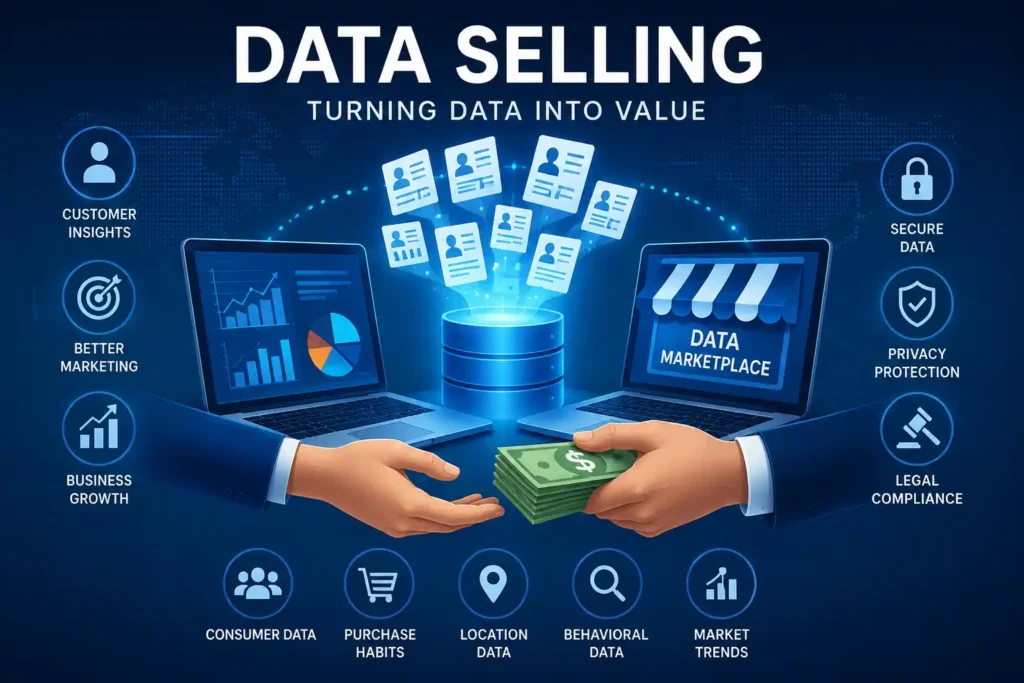
Data selling is the process of collecting, organizing, and sharing valuable information with businesses, researchers, or marketers in exchange for payment. The data may include customer preferences, shopping habits, website behavior, demographic details, and market trends.
Organizations use this information to better understand consumer behavior and make informed business decisions. As technology advances, the demand for accurate and high-quality data continues to grow.
Why is Data Important?
Data helps businesses understand what customers want and how they interact with products and services. By analyzing data, companies can:
- Improve customer experiences
- Create personalized marketing campaigns
- Increase sales and revenue
- Predict market trends
- Make smarter business decisions
Because of these benefits, data is often referred to as the “new oil” of the digital age.
Types of Data Sold in the Market
Consumer Data
Consumer data includes information about customers such as age, gender, location, interests, and purchasing behavior. This data helps businesses target the right audience with relevant products and services.
Behavioral Data
Behavioral data tracks how users interact with websites, mobile apps, and online platforms. It may include page views, clicks, search history, and time spent on specific content.
Business Data
Business data contains information about companies, industries, competitors, and market performance. Organizations use this data for market research and strategic planning.
Market Research Data
Market research data provides insights into customer preferences, industry trends, and emerging opportunities. Companies use it to develop better products and stay competitive.
Benefits of Data Selling
Improved Business Decisions
Businesses can use purchased data to make informed decisions and identify new opportunities for growth.
Better Marketing Performance
Accurate data allows companies to create targeted advertising campaigns, reducing marketing costs and increasing conversion rates.
Additional Revenue Streams
Organizations that collect valuable information can generate extra income by selling data to interested buyers.
Enhanced Customer Experience
Data helps businesses personalize recommendations, improve services, and provide a better user experience.
Privacy Concerns in Data Selling
Although data selling offers many benefits, it also raises privacy concerns. Many users worry about how their personal information is collected, stored, and shared.
Companies must ensure that they follow privacy laws and regulations when handling customer information. Transparency and user consent are essential for building trust and maintaining ethical business practices.
Best Practices for Responsible Data Selling
Obtain User Consent
Businesses should clearly inform users about data collection practices and obtain permission before gathering personal information.
Protect Sensitive Information
Strong security measures should be implemented to prevent unauthorized access and data breaches.
Follow Legal Regulations
Organizations must comply with privacy laws and industry standards to ensure responsible data management.
Maintain Transparency
Users should know how their information is being used and shared. Clear privacy policies help establish trust.
The Future of Data Selling
The future of data selling will likely focus on greater transparency, stronger privacy protections, and advanced data analytics. Artificial intelligence and machine learning technologies are making data even more valuable for businesses. Companies that prioritize ethical data practices and user trust will be better positioned for long-term success.
As digital transformation continues across industries, the demand for high-quality data is expected to increase significantly.
Conclusion
Data selling has become an important part of the modern digital economy. It helps businesses gain valuable insights, improve marketing strategies, and enhance customer experiences. However, responsible data handling, privacy protection, and transparency are essential for maintaining consumer trust. As technology evolves, ethical and secure data selling practices will play a critical role in shaping the future of digital business.
Read More Other Information > Udise Plus Portal